Property Boards That Carry the Message from the Road
Property boards are used to advertise homes, flats, offices, retail sites, stands and new developments from the boundary line, fence or building frontage. They need to be easy to read at speed, hold up in sun and rain, and stay straight in wind. For that reason we build them as practical sign boards with clear lettering, strong fixing points and the right material for the site.
At BP Signs, property boards are supplied for sale, to let, sold, development and directional use. We work from Briardene in Durban North and install across eThekwini, Umhlanga, Pinetown, Westville, Phoenix, Verulam, Tongaat and the KZN North Coast. Whether the board is for a single residential listing or a large commercial site, the aim is the same: the property must be identified quickly and correctly.
Common Sizes, Materials and Print Options
Property boards are usually made in standard rectangular sizes so they are easy to mount, transport and replace. We can also make custom sizes for sites with unusual fence spacing, wall space or estate rules. The right size depends on road distance, speed of traffic and how much information must be shown.
- 600 mm x 450 mm for compact residential sale or to let boards
- 900 mm x 600 mm for most roadside listings and commercial boards
- 1200 mm x 900 mm for development sites and high visibility corners
- Custom sizes for estate gates, fenced sites and hoarding panels
Materials include Chromadek for long life, Perspex for a neater rigid finish and ABS for lighter panels. For short term promotions we can also produce digitally printed panels with vinyl graphics, laminated for extra UV resistance. If the board must be visible day and night, we can add reflective elements or make a light box version where power is available.
Where Property Boards Work Best
Good property boards work where passing traffic can see them clearly. That usually means boundary fences, perimeter walls, gate pillars, roadside corners, entrance driveways and development hoardings. In Durban, coastal humidity and strong wind can affect fixings so we always look at the site before production if the board is large or exposed.
These boards are suitable for:
- Residential homes, flats and sectional title units
- Commercial offices, warehouses and retail spaces
- Vacant land, stands and development sites
- Rental stock, temporary listings and auction boards
- Estate entrances and internal directional signs
If the property sits on a busy road, we may recommend a larger board or a second directional sign a little further back from the entrance. That helps motorists spot the listing before they pass the gate. For corner sites, one board on each side can improve visibility without overcrowding the message.
Installation, Fixings and Site Conditions
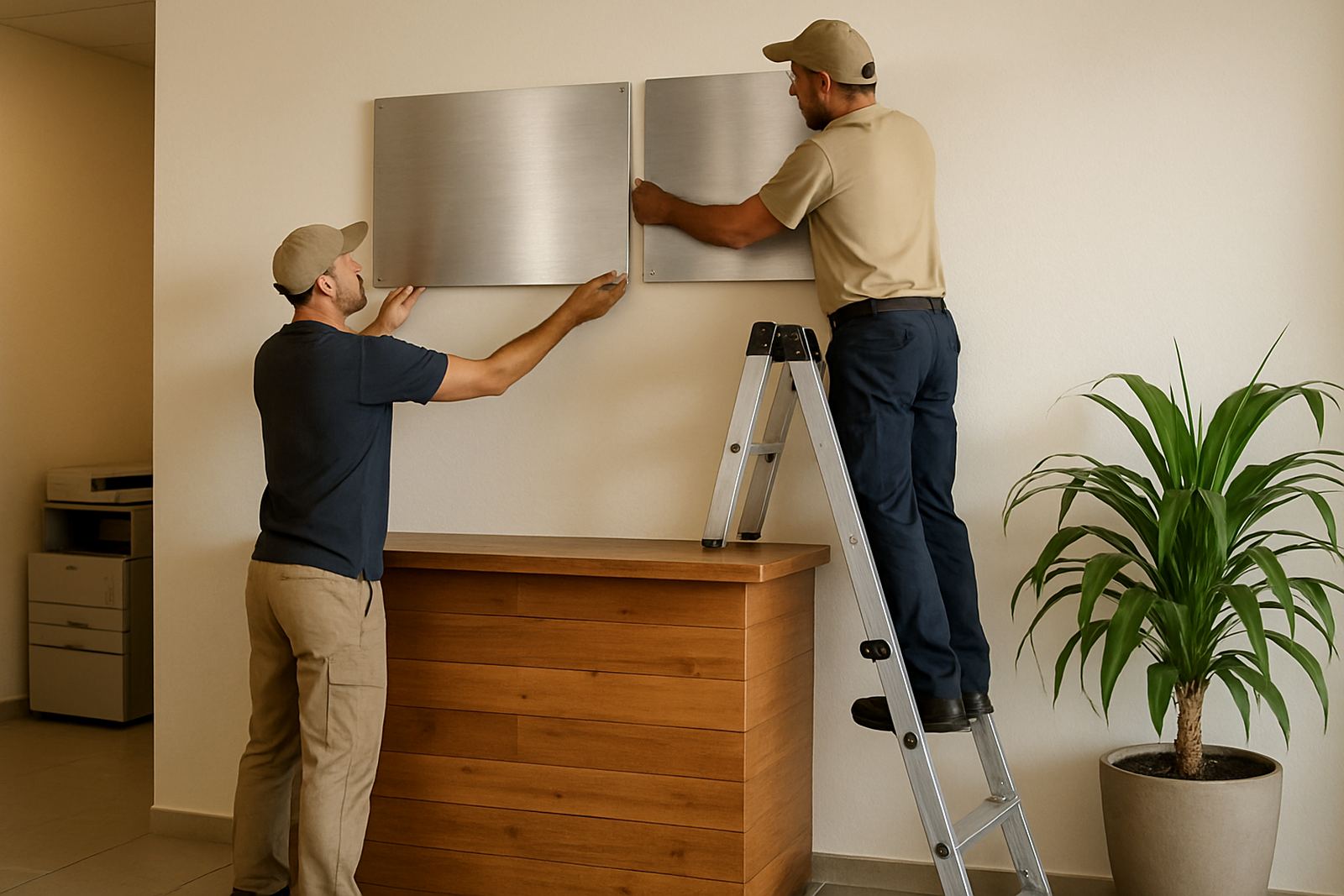
Installation needs to suit the surface and the location. A board fixed to a palisade fence is handled differently from a board mounted on a wall, gate or temporary hoarding. Our installation team checks the substrate, available space and wind exposure before deciding on the fixing method.
Typical fixing methods include cable ties, screws, stand-offs, brackets and frame mounting. For temporary sites we can fit boards in a way that makes later removal simple and clean. For permanent use, we can supply stronger backings and frame support so the board stays flat and does not ripple in the weather. In windy Durban areas, especially near open fields or the coast, proper fixing matters as much as the print itself.
Where a board is installed at height or near an access road we plan the job around safety and site access. If a development board needs to be seen after dark, we can discuss illumination options or reflective lettering. Power is only needed for light boxes or lit signs. Standard property boards do not need electricity or gas.
Artwork, Wording and Compliance Checks
Before a board goes to print, the wording must be checked carefully. Property boards are often rushed because a listing needs to go live quickly, but mistakes on the board can create confusion at the gate or in the street. We set up artwork from supplied details and make sure the contact message, property type, agent name and directional wording are laid out clearly.
It helps to confirm the following before ordering:
- Correct property address and suburb name
- Sale, to let, sold or development wording
- Agent or company name exactly as it should appear
- Phone number, enquiry route or QR code details
- Logo placement, colours and any directional arrows
- Estate or municipal rules that affect size, mounting or placement
Some estates and municipalities have limits on board size, placement or the number of signs allowed per property. If the site is in an area with strict rules, it is worth checking first so the board can be produced to suit the location without delays.
Care, Servicing and Replacement Planning
Property boards are often left outside for weeks or months, so basic care helps keep them readable. Dust, salt spray, road grime and bird droppings can reduce visibility, especially on coastal routes in Durban North, Umhlanga and along the North Coast. A gentle wash with clean water and a soft cloth is usually enough. Harsh chemicals and abrasive pads can damage print and surface coatings.
If the board is reused for multiple listings, it should be checked for fading, bent corners and cracked fixings before each move. We can assist with refurbishment, replacement panels and removal when a listing changes. That is useful for agencies and property owners who want the board changed over quickly without leaving old signage on site.
For larger developments, a maintenance visit can keep the board straight and legible after storms or strong wind. A board that is leaning or dull loses impact fast, so a simple maintenance schedule saves money over time.
Ordering the Right Board for Your Site
The best property board is the one that matches the site and the viewing distance. A board that is too small will be missed. A board that is too busy will be hard to read from the road. When ordering, it helps to think about who must see it, how far away they will be and how long the board needs to stay up.
We supply property boards for residential listings, commercial stock and new developments across Briardene, Durban North, Umhlanga, Pinetown, Ballito, Tongaat, Verulam, Westville and Phoenix. If you need site surveys, artwork setup, fabrication, printing, installation or later removal, our team can handle the full process. That keeps the board consistent from design through to the final fix on site.
Key facts
| Typical sizes | 600 x 450 mm, 900 x 600 mm, 1200 x 900 mm, custom sizes available |
|---|---|
| Materials | Chromadek, Perspex and ABS board options |
| Print method | Digital printing with vinyl cutting and print lamination where required |
| Fixing options | Cable ties, screws, brackets, stand-offs and frame mounting |
| Power needs | None for standard boards; electricity only for light boxes or illuminated signs |
| Best use | Sale, to let, sold and development signage for residential and commercial property |