What Door Signs Do in a Busy Workplace
Door signs do more than name a room. They help staff, visitors and contractors move through the building with less confusion, which matters in offices, clinics, schools, workshops and shared commercial spaces. In places with frequent deliveries or client visits, a clear sign saves time and reduces back-and-forth at reception. It also keeps your building looking organised, even when different tenants or departments use the same corridor.
We make door signs for internal and external use, depending on where they will be fitted. For internal doors, a slim plaque in acrylic, ABS or printed vinyl is often enough. For exposed entrances, a tougher face with outdoor grade adhesive, screws or stand-off fixings is better. If the door is metal, glass, timber or aluminium, the fixing method is chosen to suit the surface and daily handling.
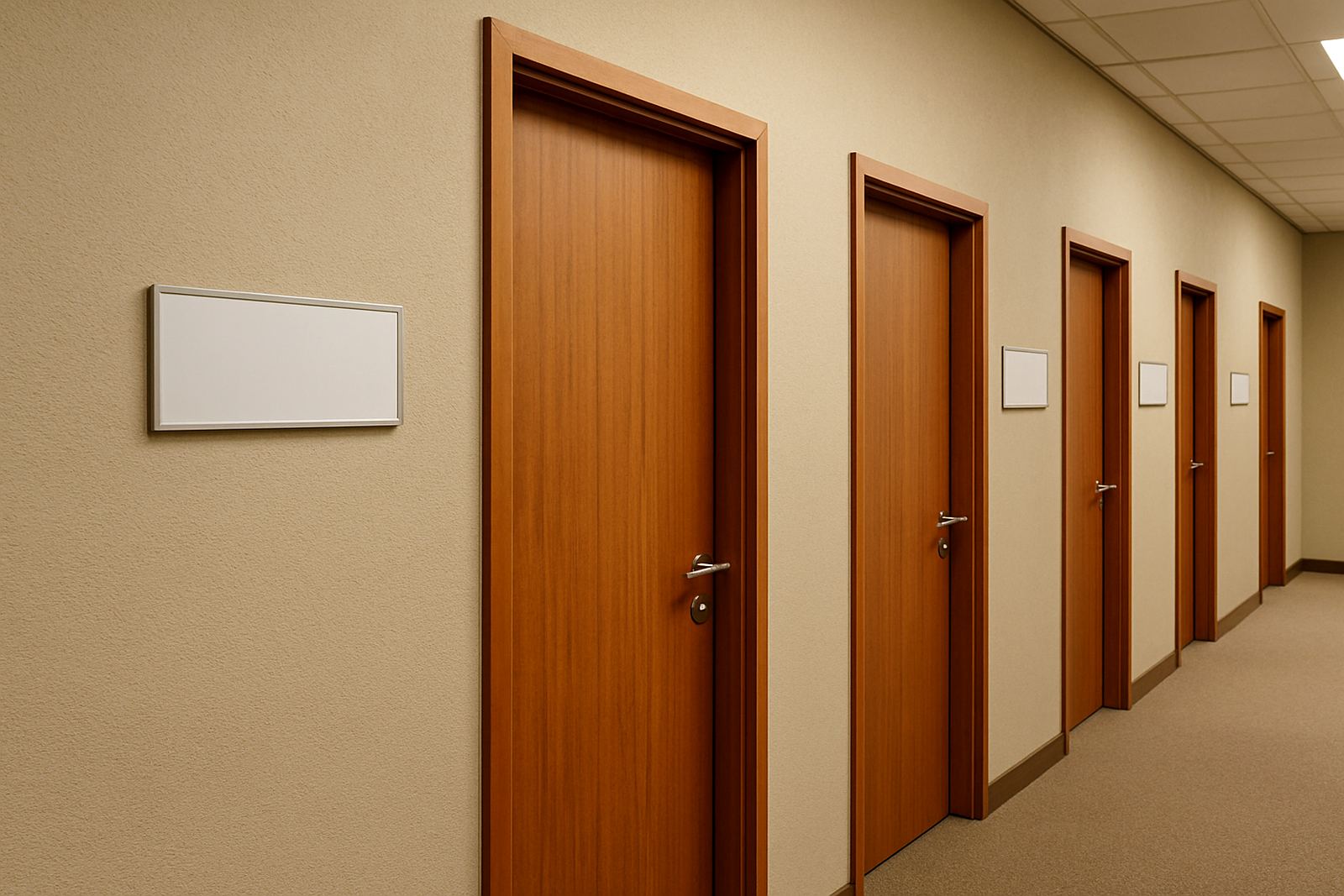
Common uses include room numbers, department names, staff offices, meeting rooms, consulting rooms and toilet signage. We can also include braille or tactile elements where needed for accessibility requirements.
Sizes, Materials and Finishes That Fit the Door
Door signs are usually compact, but the right size depends on viewing distance and the amount of text. A simple office name can work on a smaller plaque, while a longer title or room reference needs more width. Typical sizes range from 150 x 50 mm up to 300 x 200 mm, with custom sizes available for special layouts and larger door frames.
Material choice affects both appearance and lifespan. Acrylic gives a neat, modern finish and works well for reception-led offices. ABS is practical for cost-sensitive fitouts and holds up well indoors. Perspex-style sheets suit colour printing and cut lettering. For a harder working environment, we can use printed vinyl over a rigid backer with lamination for extra wear resistance.
- Common finishes: clear, frosted, white, brushed-look or full colour printed
- Common fixing options: double-sided adhesive tape, screws, stand-offs or removable mounting pads
- Common text styles: room names, numbers, logos, directional arrows and working hours
Where Door Signs Work Best in eThekwini and Beyond
Door signs suit any space where movement needs to be simple and orderly. In Durban North and Briardene, they are often used in offices, shared business parks and medical suites. In Umhlanga, they help with corporate floors, consulting rooms and retail back offices. In Pinetown and Westville, they are practical for workshops, admin areas and school buildings where people are moving in and out all day.
Along the KZN North Coast, moisture and salty air can affect some finishes over time, especially on doors near entrances or covered walkways. In these areas we often suggest materials and fixings that cope better with humidity and regular cleaning. For businesses in Phoenix, Verulam and Tongaat, simple, clear signage is often the best choice when there are many rooms or a changing team structure. A good door sign should stay readable, tidy and easy to update when a department name changes.
If your site has glass doors, shared corridors or landlord rules, we can plan the sign size and fixing method around that. This avoids drilling where it is not allowed and helps with clean removal later if the tenancy changes.
Installation, Power and Special Requirements
Most door signs do not need power or gas. They are non-illuminated identification signs, so they are fitted without an electrical connection in the normal course. That makes them quick to install and suitable for occupied offices, clinics and retail spaces where there is little room for disruption. If you need illuminated door or directory signs for a larger corporate site, we can advise on the right placement and what the electrician will need to prepare.
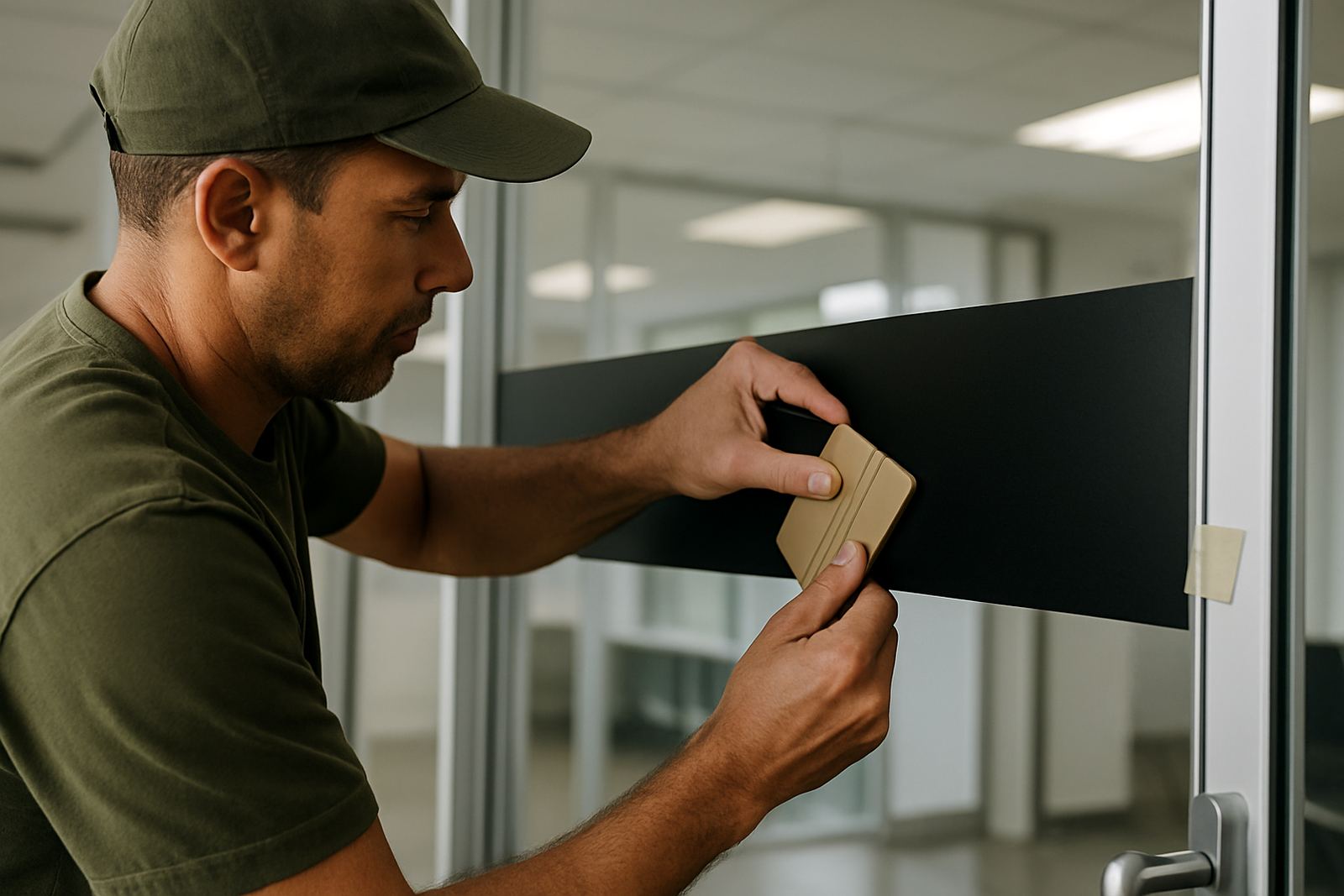
For standard door signs, installation is usually straightforward, but the mounting surface still matters. Painted timber doors, aluminium frames, powder-coated metal and glass each need a different approach. In some cases a sign can be fitted with double-sided adhesive for a clean look, while other sites are better served by screws or concealed fixings. If your premises has security access doors, fire doors or glazed panels, we check these details before work starts so the sign does not interfere with operation or compliance.
- Before installation we check: door swing, handle position, surface finish, height and visibility
- We can work with: occupied buildings, office hours, staged fitouts and tenancy handovers
- For special sites: we consider fire doors, glass partitions and landlord restrictions
Care, Cleaning and Sign Refurbishment
Door signs usually need very little maintenance, but regular cleaning keeps them looking sharp. A soft cloth, mild soap and water are enough for most finishes. Avoid harsh cleaners, scouring pads and strong solvents because they can scratch the face or dull the print. On glass doors, a careful clean around the edges helps keep the sign free of fingerprints and dust. In high traffic areas, it is worth checking the signs every few months for lifting edges, fading or loosening.
When a business changes a room name, department or logo, the sign does not always need to be replaced from scratch. We can often refurbish the existing plaque, swap the printed face or update the vinyl layer. That is useful for offices doing phased renaming, tenant changes or a full reception refresh. If the old sign has been damaged during renovations, we also handle removals and replacements so the new signage matches the rest of the building.
For coastal clients and sites with strong sun exposure, a laminated print or a more durable rigid sign will usually hold up better over time. That said, even a tough sign should be checked if it is repeatedly exposed to cleaning chemicals or direct weather at an entrance.
What to Check Before You Order Door Signs
The cleanest results come from getting the details right before production starts. We recommend sending the exact wording, spelling, room numbers and any branding rules in one clear list. If the signs need to match an existing system, such as a colour code or font style, that should be noted early. For multi-room projects, a simple schedule with each room name and size helps avoid mix-ups. It also saves time where the building has more than one suite, corridor or tenant.
It helps to know whether the sign is for indoor or outdoor use, whether it must be removable, and whether there are restrictions on drilling. If the door is glass, please mention if frosting, contra-vision or a clear panel is needed around the text. For offices with shared reception areas, we can keep the style consistent across door signs, wall signs and directional signage so the building feels considered rather than pieced together.
- Send us: wording, room list, preferred size, material choice and fixing preference
- Tell us if: the sign must match existing branding or work with landlord rules
- Ask about: frost films, printed panels, tactile lettering and future update options
BP Signs works from Briardene in Durban North and installs across eThekwini, Umhlanga, Pinetown and the KZN North Coast. If you need room, suite or office door signs that are easy to read and practical to maintain, we can help with the right format for your site.
Key facts
| Typical sizes | 150 x 50 mm, 200 x 75 mm, 300 x 100 mm and custom sizes |
|---|---|
| Materials | Acrylic, ABS, Perspex-style sheet, printed vinyl on rigid board |
| Finishes | Clear, frosted, white, full colour printed and brushed-look effects |
| Fixing methods | Double-sided tape, screws, stand-offs or removable mounting pads |
| Use cases | Offices, suites, consulting rooms, meeting rooms, toilets and shared corridors |
| Power or gas needs | None for standard door signs, as they are non-illuminated |