What a shopfront sign needs to do on a busy Durban street
A shopfront sign has one job before anything else, to be seen quickly and read from the road, the car park, or the walkway outside your unit. In Durban that means it also has to cope with strong sun, coastal moisture, dust from traffic and the odd downpour that comes in fast. We build signs that suit the size of your frontage, the viewing distance and the style of the building, whether you are in a centre, on a main road or tucked into a smaller strip mall.
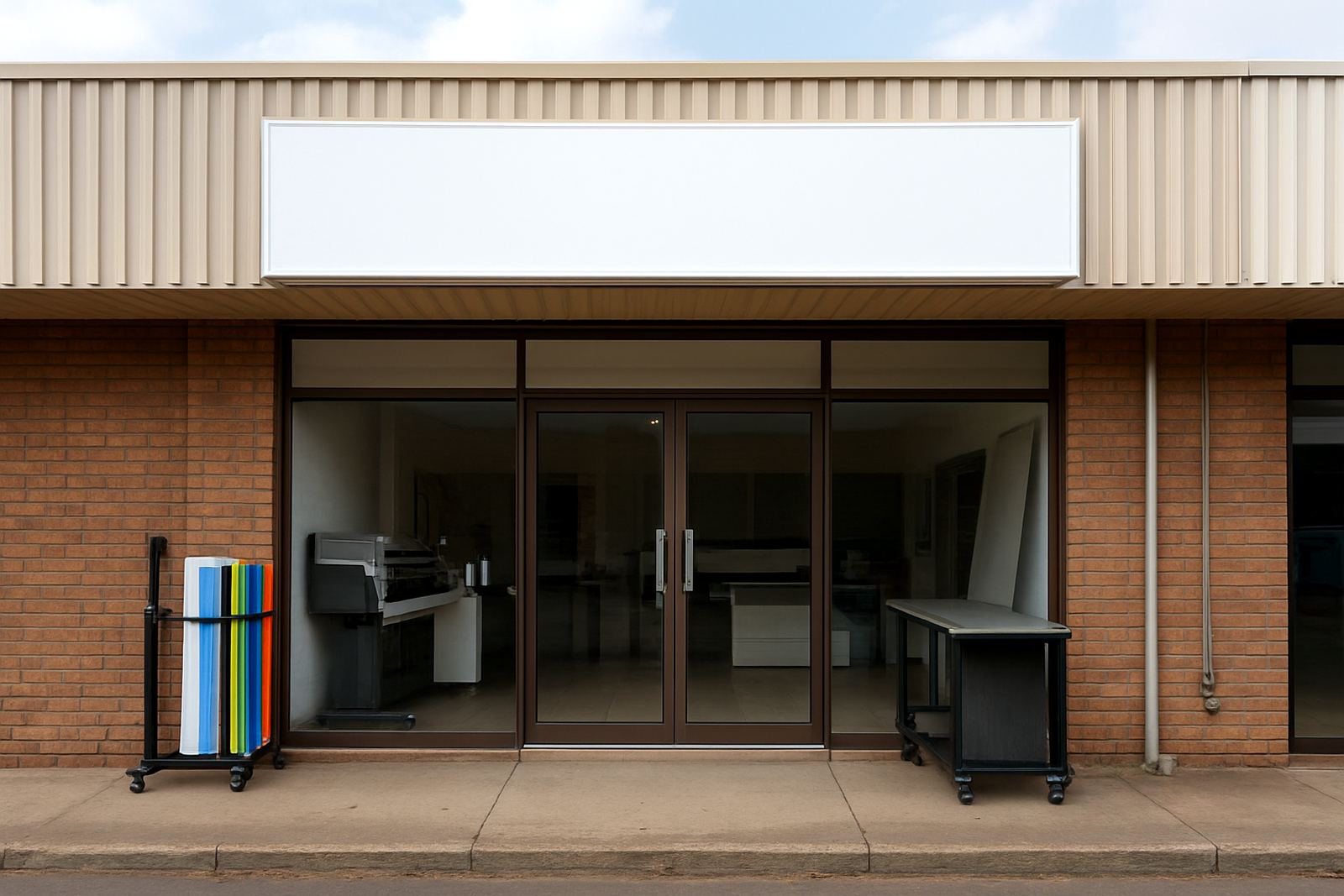
Visible fascia signs are usually the main element, with entrance panels, side returns or window graphics added where the site allows. Some stores need a simple illuminated name panel, others need a larger fascia with logo, trading hours and service details. The right mix depends on what people see first when they approach the shop, and how much wall space is available.
- Fascia signs for storefronts and centre units
- Entrance panels above doors or glazing
- Window graphics for promotion or privacy
- Light boxes where evening visibility matters
Common materials and sign formats we make for shopfronts
Shopfront signs can be made in several formats, depending on the finish you want and the fixing points on site. Chromadek is widely used for fascia panels because it is hard wearing and suitable for outdoor exposure. Perspex works well for clean faces, cut lettering and light box fronts. ABS is often used for shaped lettering and raised elements, while vinyl is useful for graphics, striping, branding panels and window film.
For busy retail areas, digital printing and laminate protection are often used for full colour artwork, especially where there are promotional images or a detailed brand layout. We also do vinyl cutting for text and logos, which gives a neat, crisp finish on glass, painted panels and metal surfaces. If you need a sign that must be visible after dark, we can supply a light box arrangement with internal illumination and a suitable front face.
- Chromadek fascia boards for outdoor durability
- Perspex faces and raised lettering
- ABS letters and logo elements
- Digital print with protective lamination
- Vinyl cut lettering and window graphics
- Light boxes for low light trading hours
Sizes, viewing distance and how to choose the right layout
There is no single size that works for every shopfront. A small service counter in a local centre may only need a 2 m to 3 m panel, while a roadside store or larger retail tenant might need a fascia of 5 m or more. Letter height matters just as much as panel size. As a guide, letters around 100 mm to 150 mm suit close viewing, while 200 mm and above is better for faster moving traffic.
When we prepare a layout, we look at the width of the frontage, the height between the canopy and parapet, and any columns, glazing or tenant rules that affect the final size. Some centres limit how far a sign can project or what colours may be used on the exterior. If the sign is being read from across a parking area or from the road, the artwork needs fewer words and stronger contrast, otherwise it gets lost very quickly.
- Small units: 2 m to 3 m fascia panels
- Medium frontages: 3 m to 5 m panels
- Large road-facing units: 5 m and above
- Letter heights from 100 mm upward, depending on sightline
Where shopfront signs suit best across Durban and KZN
Shopfront signs are used everywhere from suburban retail strips to larger mixed-use developments. In Durban North and Umhlanga, many sites need neat fascia signs that fit within centre rules and maintain a clean frontage. In Pinetown, Phoenix and Westville, the focus is often on strong visibility from the road and practical durability under daily traffic and weather. On the North Coast, especially in Ballito, Tongaat and Verulam, we often account for sun exposure and salt in the air, which can age a poorly made sign faster than expected.
These signs suit clothing stores, salons, takeaway outlets, hardware stores, medical rooms, offices with street access and service businesses that rely on walk-in traffic. They are also useful where tenants need to replace an older panel, update trading details, or refresh the frontage after a refurbishment. If your site has multiple entrances or a corner position, the sign plan can include more than one face so people can see you from different directions.
- Retail centres and arcade units
- Roadside stores and forecourt shops
- Corner sites with more than one approach
- Service businesses with street level entry
- Tenant refreshes and brand updates
Installation, fixings and power needs for illuminated signs
Installation starts with a site survey so we can measure the frontage, check access and identify any fixing concerns before fabrication. On many shopfronts, the panel is fixed to an existing frame, wall or canopy face. Where needed, we fabricate a support structure to carry the sign safely. If the site has height limits, security grilles or nearby glass, those factors are considered before the first drill goes in.
For non-illuminated signs, no power is needed. For light boxes and other illuminated shopfront signs, a power source must be available at the point of installation or close enough for a compliant connection. In some cases a sparkie is needed to confirm supply, isolate power or assist with routing. We do not use gas for normal shopfront signs, and where a centre has strict electrical or installation rules, those requirements are followed from the start. Good planning helps avoid delays and keeps the work tidy on the day.
- Site survey and measurements before fabrication
- Fixing to wall, frame or canopy face
- Optional support structure where required
- No power needed for plain fascia signs
- Electric supply needed for illuminated units
- Centre rules and access restrictions checked in advance
Care, maintenance and when a sign should be refurbished
A well made shopfront sign should stay neat for years if it is cleaned properly and checked now and then. Dust, coastal grime and bird marks can dull the face over time, so a soft cloth and mild detergent are usually enough for routine cleaning. Avoid harsh solvents on printed films, Perspex or laminate, since they can cloud the surface or lift edges. If the sign is lit, it is worth checking the illumination before peak trading periods, especially after load-shedding or after heavy rain.
We also handle sign refurbishment, removals and maintenance visits. A fascia can often be kept in service with a new face, updated lettering or a fresh print rather than a full replacement. If the sign is faded, cracked, lifting at the corners or no longer matches your current trading name, it is time to review it. Small defects can become costly if water gets behind the panel or if wind loads start to work on loose fixings.
- Clean with mild soap and a soft cloth
- Avoid harsh chemicals and abrasive pads
- Check illuminated signs after power interruptions
- Replace cracked faces or loose fixings early
What to confirm before you place an order
Before ordering a shopfront sign, it helps to have a few key details ready so the specification is right the first time. We need the frontage measurements, the mounting height, whether the sign is for inside or outside, and if there are any centre rules on size, colour, projection or lighting. If you already have artwork, it should be supplied in a usable format, but if not we can help with artwork setup and layout.
You should also confirm how the sign will be seen, from a pedestrian angle, from parked cars, or from passing traffic. That changes the scale and the amount of wording that can fit. If there are window graphics, entrance panels or multiple faces, it is best to plan the full frontage as one unit so the look stays consistent. A bit of careful checking here saves time later and avoids rework.
- Exact width and height of the sign area
- Wall, frame or canopy fixing points
- Indoor, outdoor or illuminated use
- Centre or landlord signage rules
- Artwork format and logo files
- Need for removal, refurbishment or replacement
Key facts
| Product type | Custom shopfront fascia and entrance signs |
|---|---|
| Materials | Chromadek, Perspex, ABS, printed vinyl and laminated graphics |
| Typical sizes | 2 m to 5 m plus, depending on frontage and sightline |
| Finish options | Plain, printed, cut lettering, raised letters or illuminated |
| Installation | Site measured, fabricated to size and fitted on location |
| Service area | Briardene, Durban North, Umhlanga, Pinetown, eThekwini and the KZN North Coast |