What a Light Box Sign Does for Your Frontage
A light box sign is a sealed sign cabinet with internal lighting and a printed or cut face that shines through after dark. It helps customers spot your business from the road, in parking areas and along busy retail streets where passing traffic only has a few seconds to notice your name. In Durban, that matters for both evening trading and cloudy winter days when visibility drops earlier than expected.
These signs are used on shopfronts, dealerships, pharmacies, takeaways, warehouses and office buildings. They can be single-sided on a wall, double-sided on a pole or mounted above an entrance. The cabinet protects the lighting from rain, dust and coastal humidity, while the face carries your branding in a way that stays readable from a distance. On a well-positioned frontage, a light box can work as both identification and wayfinding, especially for customers arriving after load-shedding or after dark.
Sizes, Face Types and Build Options
Light box signs can be made in a wide range of sizes, from compact 600 mm x 300 mm directional signs to larger retail and building identifiers measuring 3 m or more. The right size depends on viewing distance, mounting height and how much text or logo detail must appear on the face. Too much detail on a small box gets lost, so we normally keep the message clear and direct.
Common build options include slim wall-mounted units, deeper cabinets for stronger illumination, and double-sided boxes for corners, entrances and freestanding poles. Faces can be printed on translucent film, combined with cut vinyl or finished with a solid background and illuminated lettering. Aluminium frames are commonly used for lighter weight and better corrosion resistance, while the face may be acrylic or another suitable light-transmitting sheet. For the Durban coast, material choice matters because salty air will test cheap fittings fast.
- Single-sided or double-sided cabinet construction
- Wall-mounted, pole-mounted or hanging installation
- Printed full-colour face or cut-letter face
- Aluminium frame with acrylic illuminated face
- Choice of square, rectangular or custom-shaped format
Where Light Boxes Work Best
Light boxes suit businesses that need to stand out in low light, on busy roads or among competing shopfronts. They are commonly used on petrol forecourts, retail centres, restaurants, salons, medical rooms, churches, security offices and industrial units. If your premises are tucked back from the road, a light box can help bridge the gap between the street and the entrance.
They also work well where the frontage changes in brightness during the day. A shaded arcade, a glazed building entrance or a shop that closes after sunset all benefit from a sign that stays visible without depending on ambient light. On the North Coast and around Umhlanga, the sea air can dull surfaces quicker than inland, so a properly built illuminated sign is a practical choice. For multi-tenant sites, we can size the box to suit the building line and match the look required by your landlord or centre management.
- Shops on main roads and corner sites
- Commercial buildings with evening traffic
- Retail parks, forecourts and service stations
- Medical suites and professional offices
- Warehouses with customer reception areas
Installation, Power and Weather Protection
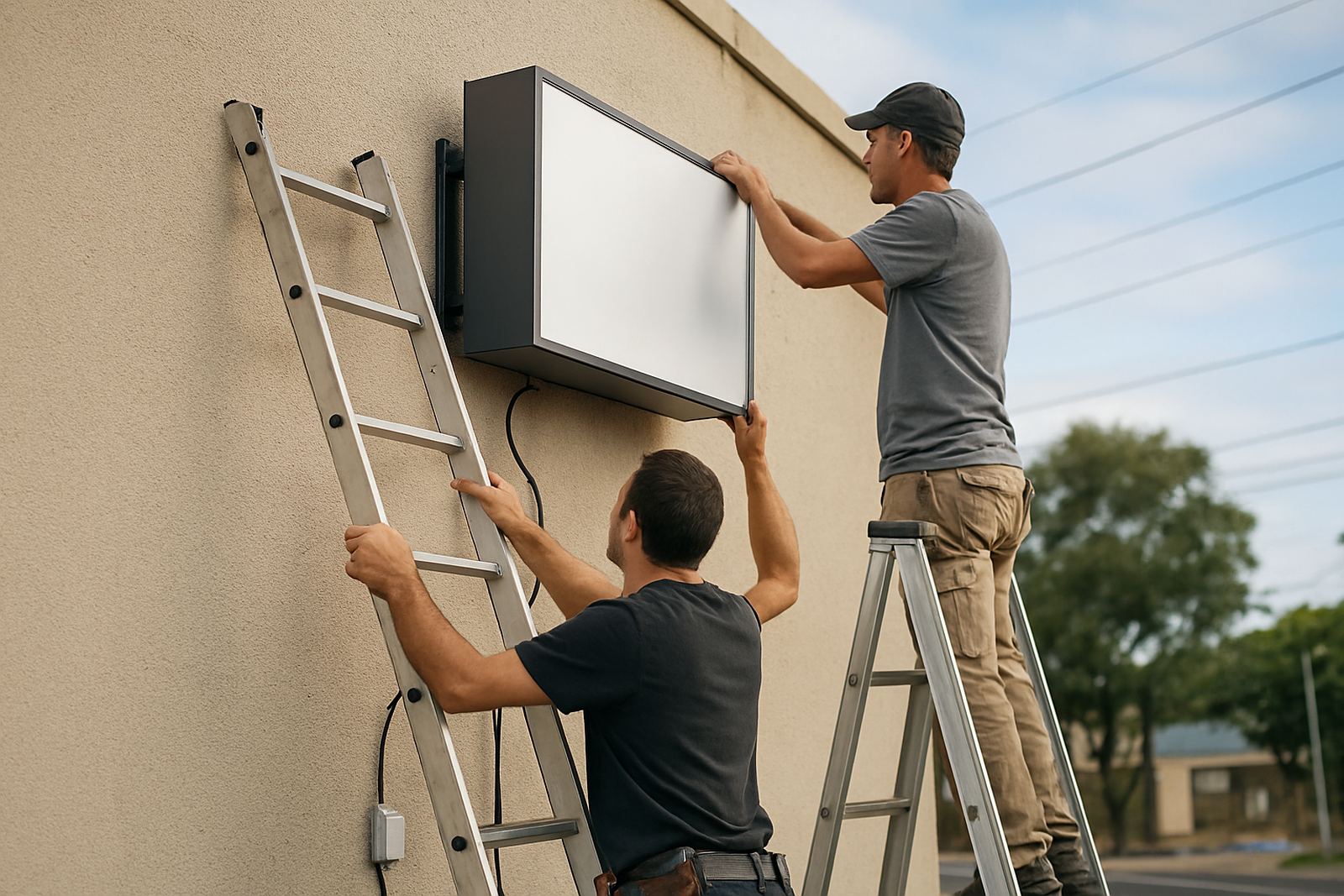
Installation starts with a site survey so the mount point, power access and viewing angle can be checked before fabrication. The sign must be fixed to a sound surface or suitable frame, with enough clearance for maintenance and safe cable routing. If the face is large, we check wind load and bracket spacing because a sign that catches the breeze the wrong way will give trouble later.
Most illuminated light boxes need a permanent electrical supply, usually 220V mains power, with an isolator and suitable cabling to local regulations. If there is no existing supply, an electrician may need to run a new point from the building or the nearest legal source. For sites affected by load-shedding, we can discuss backup options such as inverter-fed circuits, but the final electrical setup must suit the size of the sign and the site layout. In humid or coastal areas, sealed cable entries, corrosion-resistant fixings and proper drainage are important. A light box should not hold water, and it should not buzz, flicker or rattle once mounted.
Care, Cleaning and Ongoing Servicing
Light box signs need very little day-to-day attention, but they do benefit from regular checks. Dust, salt and insect build-up can reduce brightness over time, especially on coastal sites. Cleaning should be done with a soft cloth, mild soap and water, never with harsh solvents that can cloud the face or damage the print. If the sign is mounted high, it is better to arrange a maintenance visit than to improvise on site.
We recommend periodic servicing to check the lighting, wiring, fixings and face condition. If a lamp or internal component fails, the brightness can drop unevenly and the sign starts looking tired. Early repair is cheaper than waiting until the whole cabinet needs attention. Refurbishment is also possible when the structure is still good but the branding has changed, so you do not have to replace every part from scratch.
- Clean the face gently and avoid abrasive pads
- Check for flickering, dark spots or loose fittings
- Inspect seals after heavy rain or strong winds
- Book maintenance visits for high or hard to reach signs
- Update the branding when your business name or service changes
What to Check Before You Order
Before ordering a light box sign, confirm the exact wording, logo artwork, preferred size and the viewing direction. If the sign is for a shopfront, measure the space carefully and note any awnings, pipes, security shutters or glazing that may affect the mount position. It helps to know whether the sign must be visible from traffic moving left to right, right to left, or from both sides.
You should also check whether the site already has electrical provision, who controls building approvals and whether any centre or municipal rules apply. For some commercial sites in eThekwini and surrounding areas, mounting height, projection and face lighting may need approval before fabrication. If you are on a shared site, ask whether the landlord wants a specific bracket style or finish. A clear brief saves time and avoids changes after production has started.
- Confirm the exact text, logo and colours
- Measure the available wall or pole space
- Decide if the sign must be single or double-sided
- Check if power is already available at the site
- Ask about approvals, access and installation times
Why BP Signs Handles the Full Job
BP Signs works from Briardene, Durban North and handles light box signs for businesses across Durban, Umhlanga, Pinetown, Westville, Phoenix, Verulam, Tongaat and Ballito. The team includes Bongani Patrick Zulu, Nokuthula Mkhize, Sashen Naidoo, Anele Dlamini, Priya Govender and Lindokuhle Khumalo, so the project can move from artwork setup to fabrication and installation with one contact point. That keeps the process practical and avoids gaps between design, making and fitting.
We handle site surveys, large format printing, sign fabrication, window and shopfront installation, removals and maintenance visits. If your current sign is dull, damaged or no longer matches your brand, we can refurbish it or replace it with a new illuminated unit. Clients reach us through the enquiry form on our contact page, and we can work through the details before we start cutting or wiring anything. That way the finished sign suits the building, the power supply and the conditions outside, not just the artwork on paper.
Key facts
| Product type | Illuminated light box sign |
|---|---|
| Typical sizes | From 600 mm x 300 mm to 3 m plus |
| Mounting options | Wall mounted, pole mounted or double-sided |
| Materials | Aluminium cabinet, acrylic face, weather-resistant fixings |
| Power | 220V mains supply, subject to site layout and electrician sign-off |
| Best use | Shops, commercial buildings, forecourts and low-light frontages |