How we confirm the site and prepare for installation
Before we book an installation, we usually start with a site survey or a few clear site photos. This helps us check wall material, roof height, glass type, power access for illuminated signs and whether we need special fixings for coastal conditions. In Briardene, Umhlanga and other humid areas, the right fasteners matter because rust can show up quickly if the wrong steel is used.
We also confirm the final artwork, sign size and mounting position. If there are municipal or centre management rules, we factor those in early so there are no delays on the day.
- Clear measurements and mounting height
- Wall, glass or roof type
- Access needs for ladders, cherry pickers or scaffolding
- Power point location for light boxes or illuminated signs
- Any landlord, body corporate or municipal approval requirements
What time will the installers arrive
We agree on an installation window with the client, then we plan around traffic, weather and site access. Durban traffic can change quickly, especially on routes into Umhlanga, Westville and Pinetown, so we build in realistic timing rather than promising an exact minute. If rain, high wind or a load-shedding slot could affect the work, we will let you know in advance.
For smaller jobs like vinyl graphics or frosting, the visit may only take a short part of the day. Bigger work such as shopfront signs, large light boxes or vehicle graphics can take longer, especially if the surface needs cleaning, drilling or curing time. A neat finish is worth the extra few minutes.
What you need to provide before the crew arrives
Most installations go faster when the site is ready. That does not mean everything must be perfect, but there are a few things that help us work safely and accurately. If you are near a mall, industrial park or a busy road in Durban North or Tongaat, access control can also add time, so please warn us in advance.
- Someone on site who can approve the position of the sign
- Clear access to the work area and parking for the vehicle
- Permission to enter the property or building
- Any risk information, such as overhead cables or fragile surfaces
- A clean surface where possible, especially for vinyl and frosting
If the site is not ready, we will still try to assist, but a delayed start can affect the rest of the job. Sometimes a missing key or blocked loading bay is enough to put the whole schedule out by an hour or more.
Which fixings are used for different sign types
The fixing method depends on the sign and the surface. A light Perspex sign on a smooth wall is very different from a heavy Chromadek panel on a brick facade or a light box mounted high on a shopfront. We choose fixings that suit the material and the environment, especially near the coast where moisture and salt air are common.
For windows, we use clean application methods and the correct film type, whether it is frosting or contra-vision. For vehicles, we use suitable vinyl systems that stick properly to curves and recessed areas. For exterior signs, we consider wind load, vibration and water exposure so the sign stays secure over time.
- Brick, plaster, cladding or concrete walls
- Glass doors, shopfront windows and internal glass partitions
- Steel frames, posts and fascia boards
- Vehicle panels, trailers and fleet doors
- Light boxes and illuminated panels needing cable access
What happens on installation day
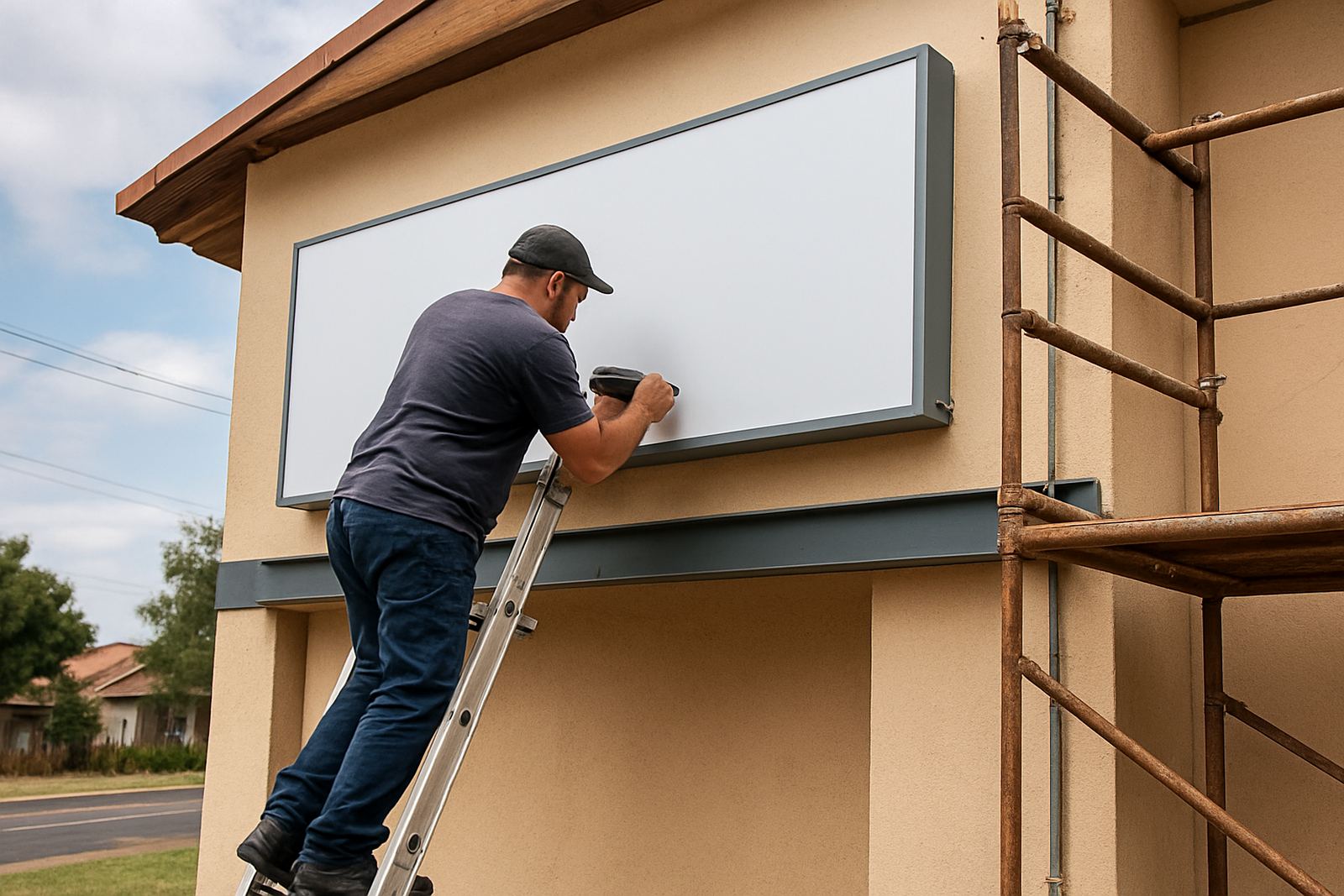
On the day, the crew checks the job brief, confirms the sign position and then starts with surface preparation. That may include cleaning, marking, drilling or protecting nearby finishes. We work carefully because a neat install is not only about how the sign looks from the road, it also matters close up where customers and staff walk past every day.
Once the sign is mounted or applied, we inspect alignment, adhesion and finish. If the job includes lighting, we test that the sign works correctly before we leave. For larger projects, we may do a final walk-through with the client or site manager. If something needs a small adjustment, we sort it there and then where possible.
Aftercare, maintenance and what to do if there is a problem
After installation, we are happy to advise on basic care. Most signs only need simple cleaning with the right cloth and mild products. Avoid harsh chemicals or high-pressure washing on printed vinyl, frosting or edge-sealed panels. In humid Durban areas and coastal towns like Ballito and Verulam, checking screws, seals and lighting now and then helps extend the life of the sign.
If a sign loosens, a print starts lifting or a light box has a fault, contact us through the enquiry form on our contact page. We handle maintenance visits, sign removals and refurbishment work across eThekwini, Umhlanga, Pinetown and the KZN North Coast.
- Keep the area around the sign clear for inspections
- Report water ingress or flickering lights early
- Do not try to re-stick vinyl edges with random glue
- Ask for a maintenance visit if the sign is damaged after a storm