Why aisle marking needs more than paint on the floor
In many warehouses the first marking job is a line down the aisle and a number at the rack end. That helps for a while, but once forklifts, pallets, seasonal stock and visiting drivers start moving through the space, the layout needs more than basic paint. Good aisle marking should guide movement at eye level and from the floor, especially where roof height is high and the site has long rows of racking.
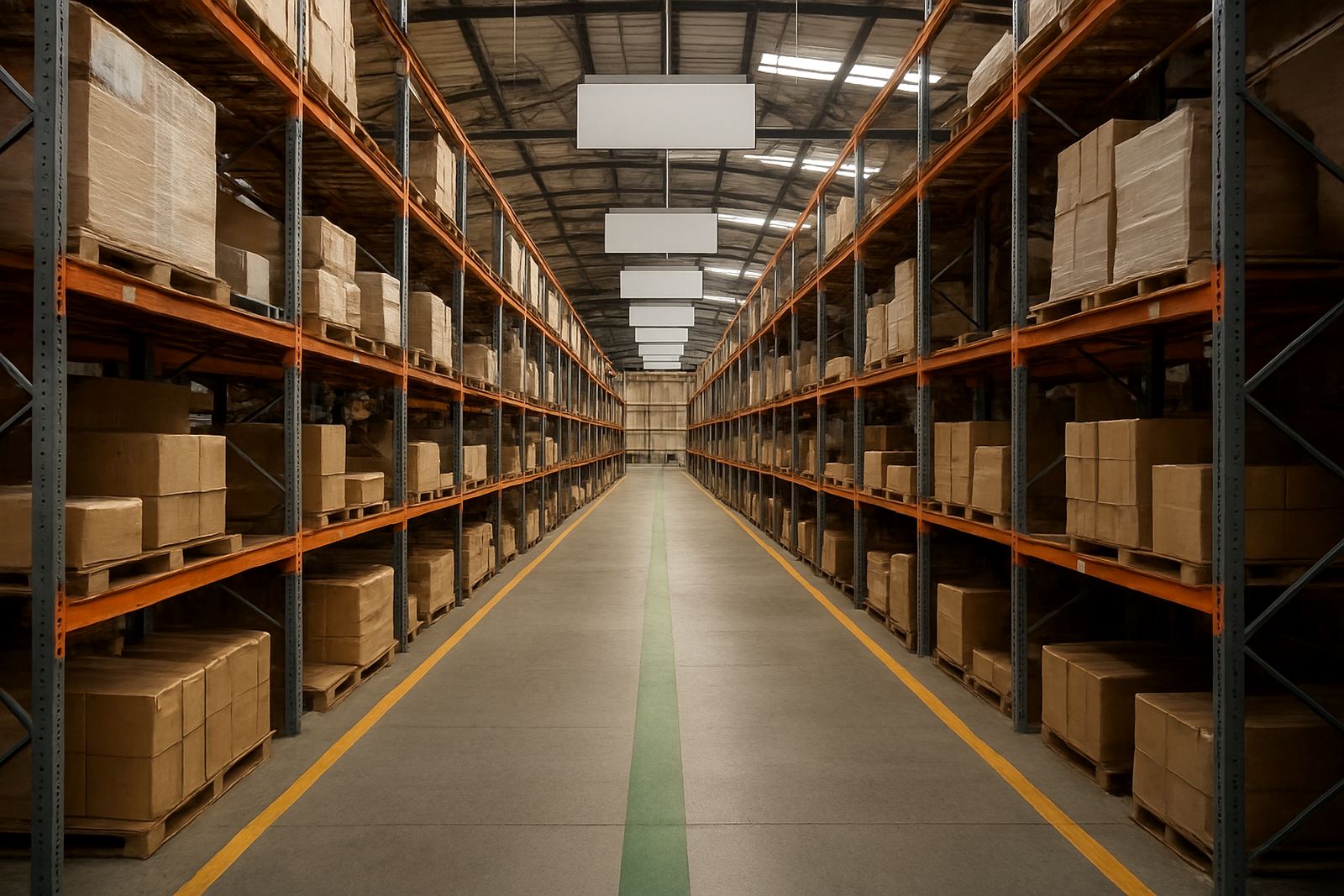
At BP Signs we plan warehouse aisle marking as a navigation system. Floor graphics show where to drive or walk, while hanging signs can be read from across the bay before a forklift turns into the wrong lane. For larger sites in Briardene, Durban North and along the KZN North Coast, that extra visibility saves time every shift and reduces damage to racking, stock and vehicles.
- Clear aisle numbers at both ends of each run
- Directional arrows for one way and two way movement
- Warning markers at crossings, loading points and pedestrian routes
- Overhead signs visible above stacked stock and tall pallet loads
Combining floor graphics with hanging signs
The strongest warehouse layouts use both formats together. Floor markings do the close-up work. They define lanes, stop points, keep-out zones and pedestrian crossings. Hanging signs do the long-range work. They help staff find aisles, bays and product zones before they reach the bay face. When both are matched to the same numbering system, staff do not waste time checking two different references.
This matters in larger eThekwini facilities where the same site may handle dispatch, receiving and storage in one building. A loading team can see an overhead sign from a forklift seat, while a picker on foot follows the floor route and aisle number at the same time. It is a small change, but it cuts confusion fast, especially during night shifts or load-shedding when visibility is not ideal.
- Match floor numbers, overhead numbers and bay labels exactly
- Use high contrast colours for fast reading in dim areas
- Keep signs clear of sprinkler lines, lights and moving equipment
- Place key markers at eye level for forklift operators and on the floor for pedestrians
Materials that hold up in Durban conditions
Warehouses in Durban North, Umhlanga and Pinetown deal with humidity, dust, vibration and occasional wet floors from deliveries or cleaning. The marking material needs to stay legible and bonded to the surface. For floor graphics we use print systems and protective lamination suited to forklift traffic and regular washing. For hanging signs, the board choice depends on span, weight and whether the sign must stay light enough for safe suspension.
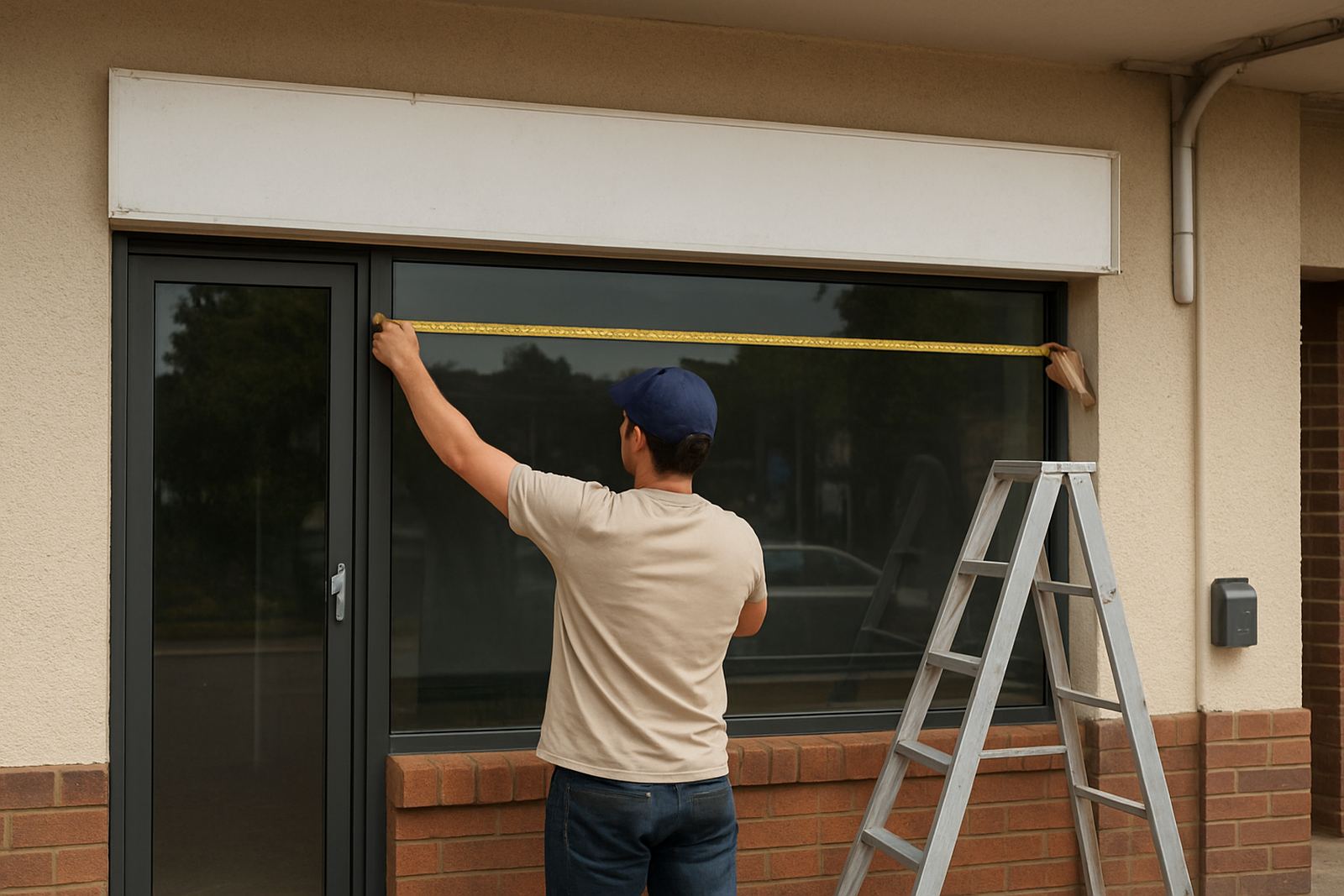
For many sites, a combination of printed vinyl, protective overlaminate and lightweight sign panels works well. If the warehouse has a coated concrete floor, prep is important. If the surface is oily or dusty, even the best film will lift early. That is why site surveys matter. We check the floor finish, traffic pattern and ceiling height before recommending the marking method.
- Slip-resistant floor film for walkways and warning zones
- Printed and laminated graphics for aisle numbers and direction arrows
- Lightweight overhead panels for clear suspended visibility
- Fixings suited to the roof structure and warehouse span
Getting the layout right before the first sign goes up
Warehouse marking works best when it follows the actual flow of the site. If the receiving area pulls traffic one way and dispatch moves another way, the markings should support that pattern instead of fighting it. The layout should also reflect pallet size, turning circles and the width needed for pedestrians. If a lane is too narrow, the marking job may look neat but it will not function well once operations start.
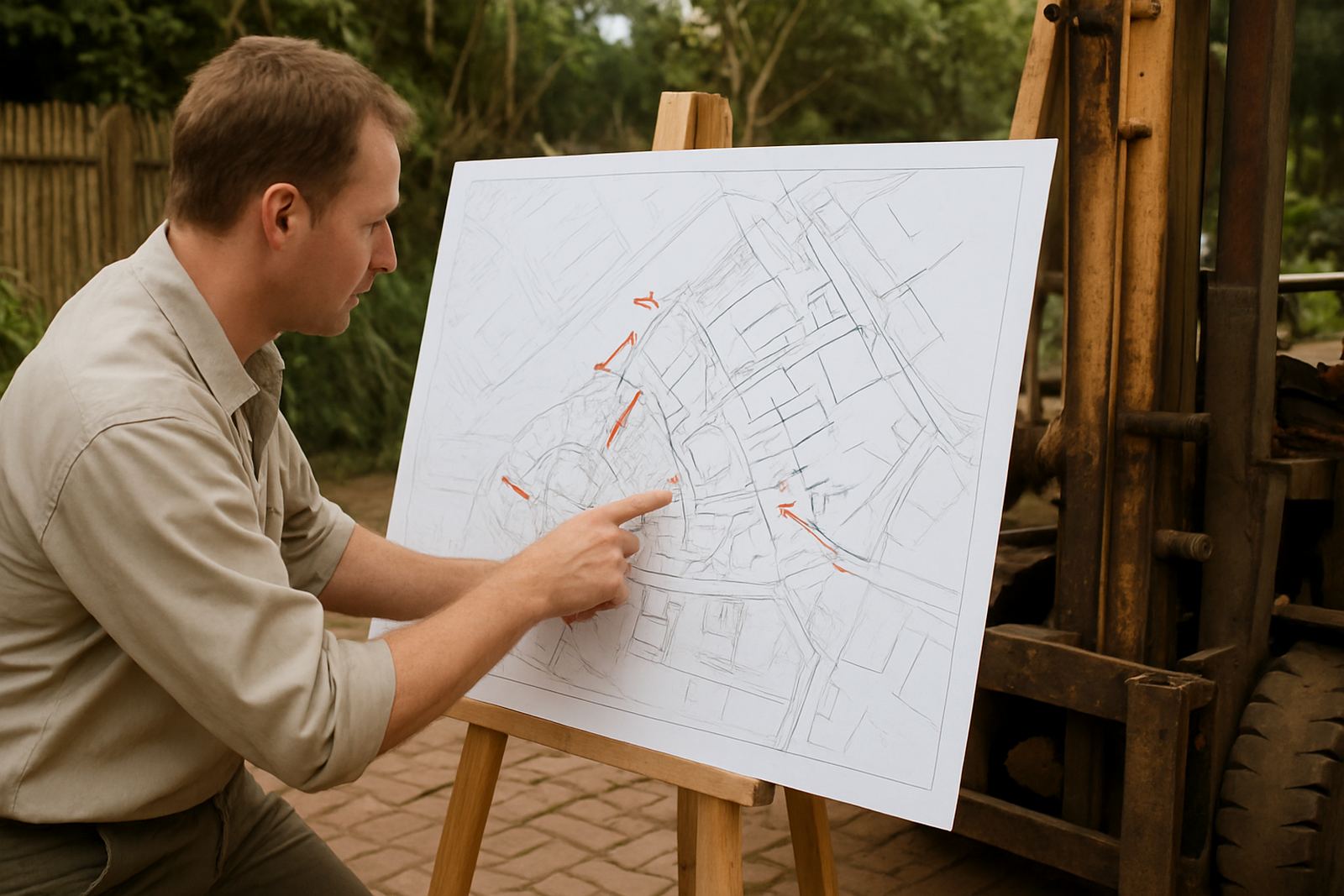
We usually begin with a site survey and an aisle schedule. That helps to map numbers, directional arrows, hazard points and any special zones such as quarantine stock, returns or maintenance access. It also helps when the warehouse changes over time. A site in Phoenix may start with six aisles and later add three more, so the marking plan should leave room for future sections without forcing a full rework.
- Survey the floor plan and walking routes before production
- Confirm rack numbering and aisle naming with warehouse staff
- Allow space for future bays, returns and temporary storage
- Place emergency exits and fire equipment markers where they are always visible
A practical Durban North example
On a recent project for a distribution warehouse near Briardene, the client had mixed storage for fast-moving goods and overflow stock from coastal deliveries. Staff were relying on verbal directions and tape markings that wore out quickly. Forklift drivers were taking a different route from the picking team, and the result was lost time at every changeover. The floor was concrete with regular cleaning, so the markings had to be tough and easy to maintain.
We set up a simple system: bright aisle numbers on the floor at each bay end, direction arrows at crossings and suspended signs above the main runs for long-distance viewing. The most important routes were marked first, then the secondary storage aisles. After installation, the team could identify each section from the driver seat before entering the row, which made counts and dispatch much easier. It was not a fancy change, just clear marking done properly.
That approach works well across Durban North, Umhlanga, Pinetown and the North Coast where warehouses often have mixed loads, shifting stock and busy receiving hours. Clear marking reduces the chance of a wrong turn, and in a busy place that is worth more than people expect.
Maintenance, updates and removal when the layout changes
Warehouse aisle marking is not a once-off job. Layouts change when a business adds racking, shifts product groups or creates a new dispatch flow. That means the marking system should be easy to update without leaving old numbers behind. If outdated signs stay up, staff lose trust in the whole system.
We offer maintenance visits, refurbishment and sign removals for sites that need changes after expansion or reorganisation. In some cases only a few aisle markers need replacing. In others the whole numbering logic needs a reset. Either way, the goal is the same: keep the warehouse easy to read and safe to move through.
- Replace faded floor graphics before they become hard to read
- Remove obsolete signs when stock zones are reassigned
- Update numbering after aisle extensions or rack changes
- Check hanging fixings during maintenance visits, especially after strong winds or roof work
How BP Signs handles warehouse marking projects
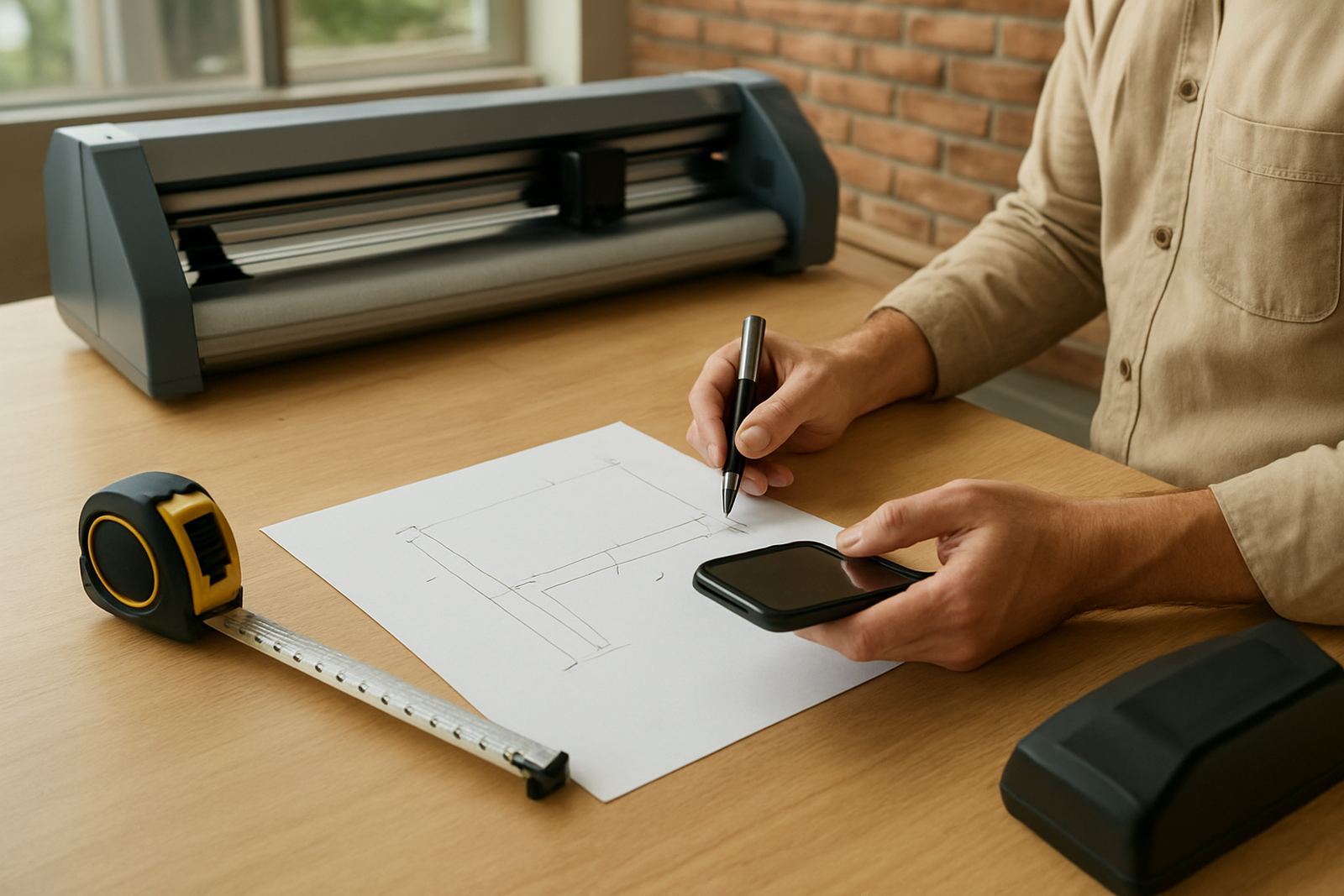
BP Signs works from Briardene, Durban North and installs across eThekwini, Umhlanga, Pinetown and the KZN North Coast. Our team handles site surveys, artwork setup, large format printing, vinyl cutting, sign fabrication, window installation, vehicle installation, shopfront installation, sign refurbishment, sign removals and maintenance visits. For warehouse aisle marking, that means one team can measure the site, prepare the artwork, produce the graphics and fit them on site.
The team led by Bongani Patrick Zulu includes operations, production, design, sales and installation support, so the job stays coordinated from the first measurement to the final check. For a warehouse client, that coordination matters because the work has to fit around stock movement and shift times. When the marking is planned well, the warehouse runs cleaner and faster, and staff can find their way without second guessing.
If your site needs aisle numbers, floor arrows and overhead signs that work together, the right time to plan it is before the next stock shuffle. A clear system pays back every day.