
Why Frosting Works Better Than Plain Covering
Most people ask for frosting when they want privacy, but a full block of vinyl is not always the best answer. In a retail space or reception area, solid coverage can make glass look heavy and remove the open feel that clients like. Frosting lets light through while still cutting down on direct sight lines, which is useful for meeting rooms, clinics, salons and street-facing offices.
In Durban North and Umhlanga, where strong sun and humid air are part of everyday conditions, frosted glass also helps reduce the harsh look of clear panes. It is a practical choice for doors, balustrades and partitions, especially where you want a neat finish that still feels light. For coastal sites, a clean vinyl application matters because edges that lift or trap dirt will show sooner.
Classic Frosting Bands For Offices And Street Frontages
One of the most common choices is a simple band across the middle of the glass. This works well for boardrooms, waiting areas and shopfront windows because it gives privacy where people sit or stand, while keeping the top and bottom sections open. It is a good option for businesses that want a tidy, professional appearance without covering the whole pane.
Frosting bands can be matched to door handles, window heights and furniture lines so the finish feels planned rather than random. On a ground-floor office in Pinetown, for example, a 900 mm band can hide counter level activity from passers-by and still let natural light move through the space. Small details like keeping the same height across several panes make the frontage look well considered.
- Use a consistent band height across all glass panels
- Leave sight lines open above eye level where possible
- Keep logos or office names in clear vinyl for contrast
- Allow for door handles and lock hardware during layout
Patterned Frosting For A More Distinct Look
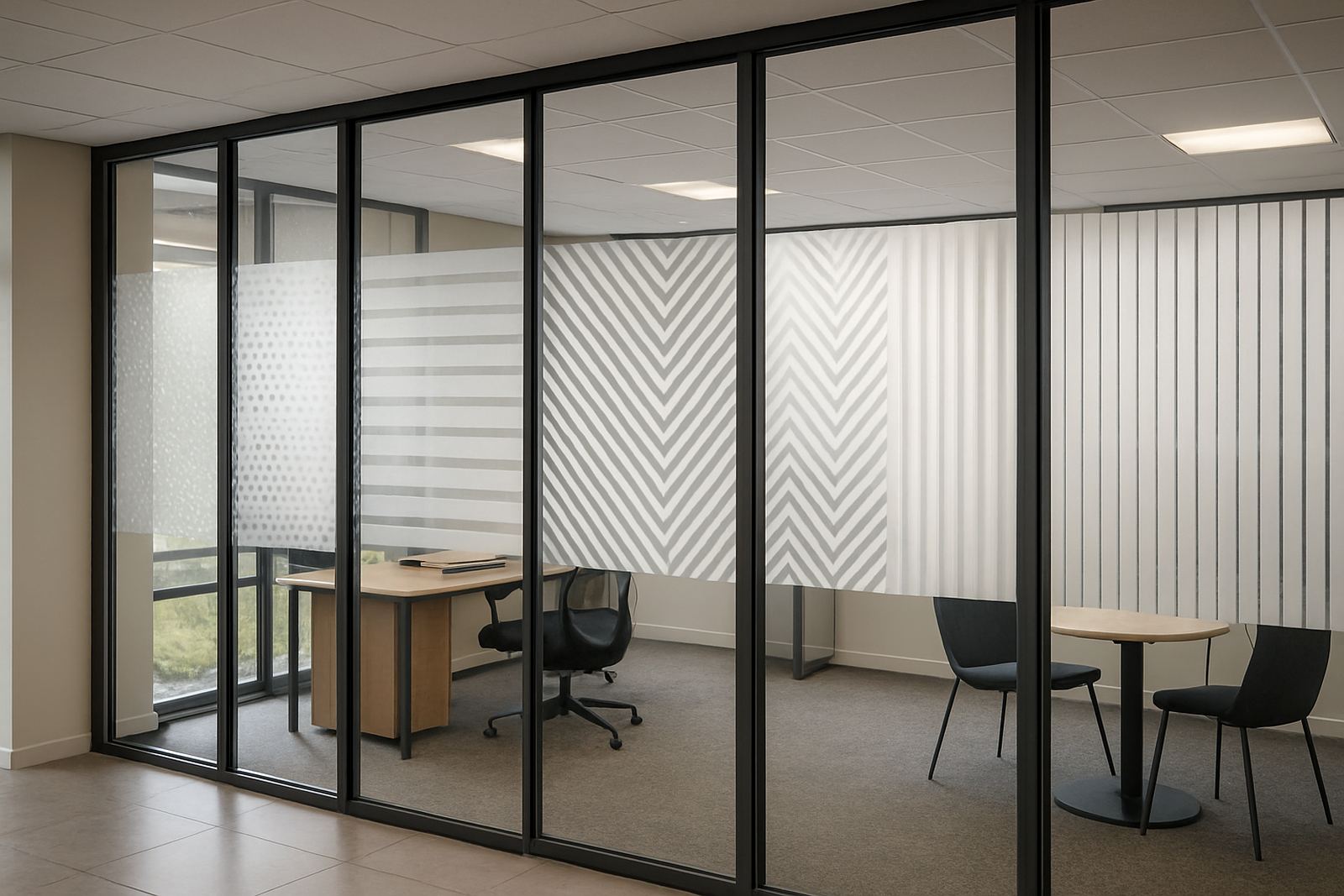
If you want something beyond plain frosting, patterned cuts can add interest without becoming busy. Stripes, blocks, chevrons and stepped panels work well on internal partitions and reception glazing. These patterns can also help direct movement, especially in larger offices or customer-facing spaces where people need a visual cue for walkways and entrances.
Patterned frosting is often chosen by businesses that want a modern but restrained look. On a window wall facing the road in Verulam, a repeated diagonal pattern can reduce visibility from outside while still letting the interior read as open and light. The key is to keep the pattern simple enough that it does not fight with the rest of the signage.
- Horizontal lines suit long window runs and receptions
- Vertical panels can make narrow spaces feel taller
- Geometric repeats work well on glass doors and partitions
- Simple patterns are easier to clean and maintain
Logo Cut Frosting For Brand Presence Without Bulk
Some clients want privacy and branding in the same application. That is where logo cut frosting works well. A logo or company name can be cut out of a frosted field, or done in reverse, so the glass still carries identity without needing a large printed panel. This is useful for clinics, agencies, showrooms and small offices where the frontage must stay calm and professional.
We often see this approach on business entrances in Westville and Phoenix, where owners want the glass to identify the business from the road, but not look overdone. A logo cut in frosting can be placed at eye level on the door, while the rest of the pane stays lightly frosted for privacy. It also pairs well with clear glass and aluminium frames, which are common in newer commercial buildings.
Because coastal humidity and regular cleaning can affect the look over time, it helps to keep the artwork simple and the cut lines clean. Fine detail may look good on a screen but it can become hard to read once it is installed on glass that catches direct sunlight.
Frosting For Homes, Salons And Small Retail Spaces
Frosting is not just for offices. In homes, it is often used on bathroom windows, front doors, stair landings and street-facing panes where privacy is needed without shutting out daylight. In salons, medical rooms and treatment spaces, it helps create a calm interior while still allowing staff to check movement outside. Small retailers also use it on storeroom windows, side panels and office doors at the back of the shop.
For businesses close to the coast or in high-traffic areas around eThekwini, frosted glass can make a space feel more controlled and less exposed. It is especially helpful where neighbours are close or the street is busy. A well placed frosting design can do the job of a blind, but with a cleaner look and no fabric to collect dust or moisture.
- Bathrooms and private rooms in homes
- Clinic consult rooms and therapy spaces
- Salon wash areas and treatment rooms
- Back offices, storerooms and staff entrances
- Street-facing windows where privacy matters
How To Choose The Right Frosting Pattern
The best pattern depends on how much privacy you need and how much of the glass you want to keep open. If the space needs full screening at seated height, a solid band or full frosted lower section may be the answer. If the aim is only to soften direct views, a lighter pattern with open sections can be enough. The size of the window, the distance from the pavement and the amount of interior lighting all affect the result.
We normally advise clients to think about the glass from both sides. A pattern that looks neat from the inside should also read well from the road or parking area outside. On larger sites in Briardene or Umhlanga, site surveys help us measure the panels properly and check for any film edges, security grilles or existing tint that may affect the layout. That extra planning reduces waste and keeps the install tidy.
For long-term use, print lamination is not usually needed on plain frosting, but accurate cutting, careful surface prep and proper installation are essential. On glass doors that open often, the pattern must avoid handles and hinges so it lasts through daily traffic. If maintenance visits are needed later, a good layout makes replacement or repairs far easier.
A Durban Example That Keeps Light And Privacy Balanced
A recent local brief involved a small office near the Durban North corridor where the client wanted privacy from the street but did not want the front to feel closed off. The solution was a frosted lower section with a clear band above it, plus a simple cut logo at the main entrance. That gave staff cover at seated height, allowed daylight into the reception and kept the frontage easy to read from the pavement.
This kind of result works well in KZN because the light can be strong and the temperatures mean people use glass doors and air-conditioned interiors for much of the year. A thoughtful frosting pattern makes the building more comfortable to use, and it avoids the heavy look that a full cover can create. For many clients, that balance is exactly what they need.
BP Signs handles site surveys, artwork setup, vinyl cutting, fabrication and installation across Durban North, Umhlanga, Pinetown, Ballito and the wider KZN North Coast. Whether it is a single door panel or a full set of glazed partitions, the aim is the same: practical privacy, a clean finish and signage that suits the space.