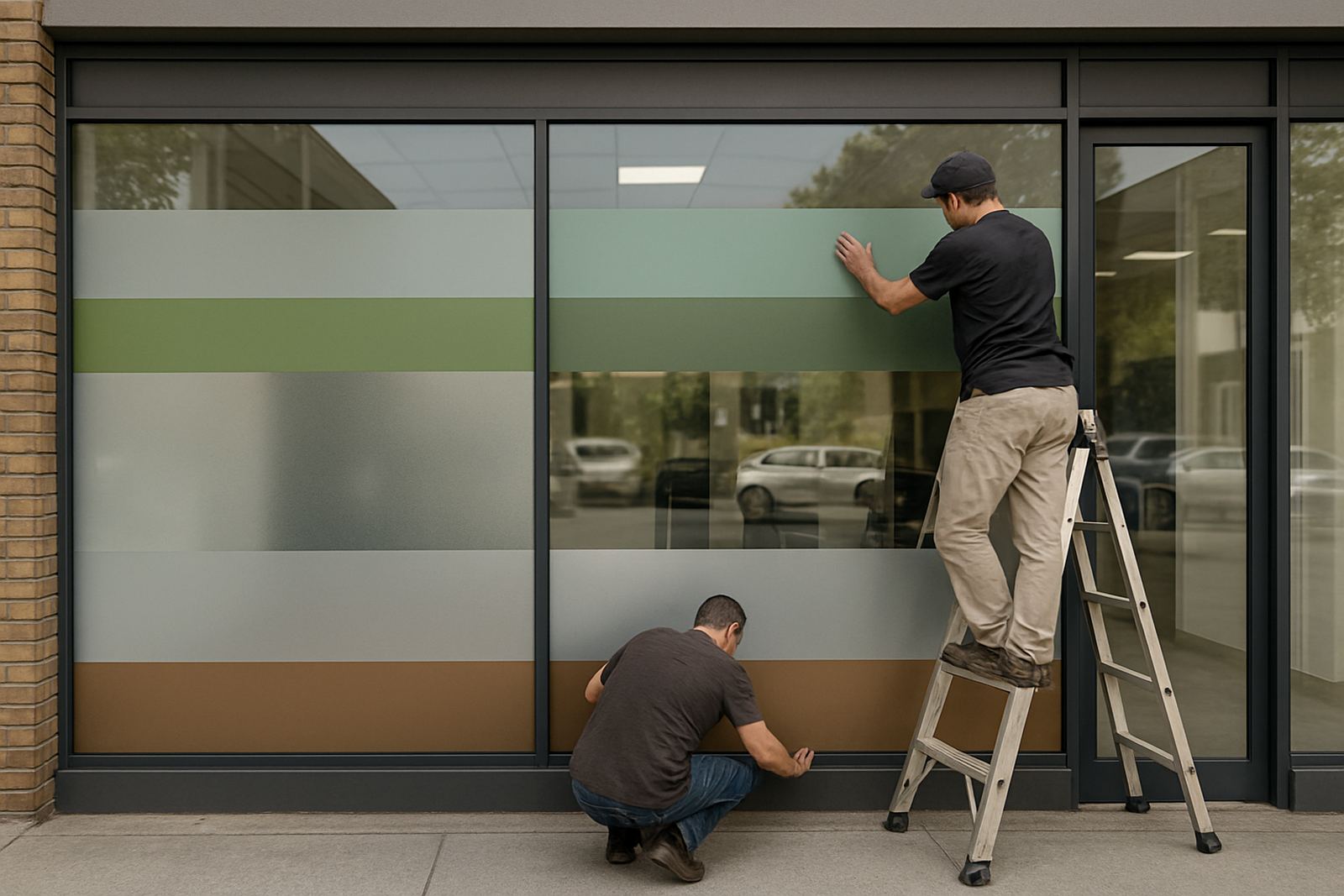
Make the glass work harder than a plain display window
Retail window graphics are one of the most useful signage tools for shops that depend on passing traffic. In Durban, where sun glare, heat and humid conditions can change how a shopfront feels during the day, the glass can either help your trading or work against it. Used properly, it gives you space for branding, trading hours, promotions and privacy without turning the front of the shop into a dark box.
The main advantage is control. You can cover the lower half of a window for a promotion and keep the upper part open for natural light. You can add frosted sections for privacy near a fitting room, till point or office corner. You can also use clear printed panels to advertise products while still allowing people to see into the store. For many retailers, that balance matters more than full coverage.
In busy areas like Umhlanga, Durban North and Pinetown, people often make a split second decision as they walk past. Clean window graphics can give them a reason to stop without making the shop feel closed off. That is especially useful for fashion stores, salons, convenience shops, medical retail counters and service businesses with glass frontage.
Choose the right window film for the job
Not every glass job needs the same material. The best result depends on how much visibility, light and privacy you want. A good site survey helps determine whether the window needs a full print, a partial frosting or a cut vinyl message that can stand up to daily wear.
- Printed vinyl suits promotions, product images and branding across larger glass areas.
- Cut vinyl works well for logos, trading hours, opening specials and clean text.
- Frosted film is useful where staff need privacy but the space should still feel open.
- Contra-vision allows visibility from the inside while carrying a printed message outside.
- Laminate protection helps printed graphics last longer against cleaning, sun and scratches.
For coastal shops in Ballito, Tongaat and Verulam, the choice of film matters because sea air and strong sunlight can shorten the life of poor-quality work. In those conditions, graphics need proper surface preparation and correct application. A badly fitted window can start lifting at the corners, bubble up or stain when cleaned. That is not just untidy, it also reflects badly on the business.
Promote offers without hiding your stockroom and front light
One of the most common mistakes is trying to use every bit of glass for advertising. That can leave the shop too dark, and customers may feel shut out before they even enter. The better approach is to use graphics strategically. Put the strongest message where it will be seen first, then leave sections open for light and visibility.
For example, a clothing store in Westville might use a bold sale panel on the lower section of the glass, then keep the upper third open with a simple logo and trading hours. A pharmacy in Phoenix may use frosted bands on the side panels for privacy while using the main door for a clean welcome message. A cellular accessory store in Briardene could keep the glass clear enough to show stock, then add a printed offer strip for a weekend special. Small choices like these keep the frontage active without making the interior feel boxed in.
Retailers also need to think about the customer journey inside the shop. Light helps people read labels, inspect fabrics and move comfortably. If the windows are too heavily covered, the lights inside end up doing all the work and the space can feel more cramped than it needs to be. Balance matters, especially in smaller units.
Plan graphics around Durban weather and daily trade
Durban shopfronts face a few practical issues that should be planned for from the start. Strong sun can fade poor prints. Afternoon heat can affect adhesives. Salt in the air can shorten the life of edging and fittings near the coast. During load-shedding, window graphics also need to look presentable when the interior lights are off and the shop is relying on daylight or backup power.
That means the graphics should be readable in different conditions. Dark text on a light background usually holds up better for storefront messaging than busy artwork with too many colours. If the shop has a reflective street-facing window, a matte finish can reduce glare. If privacy is important, a frost band at eye level may be more practical than full coverage.
- Keep the main message simple so it can be read from a passing taxi or car.
- Leave space around logos and sale wording so the glass does not feel cluttered.
- Ask for measurements taken on site, not guessed from photos.
- Plan around door handles, window frames and alarm contacts before printing.
- Use the same visual style across all windows for a neater street view.
These details matter because retail glass is not a flat poster board. It is part of a live trading space that gets cleaned, opened, locked and exposed to weather every day. When the layout is right, the window keeps doing its job long after the promotion has started.
Local example: a busy shopfront that needed privacy and promotions
Consider a small beauty retailer in Umhlanga that wanted more privacy near the till area but also needed to advertise monthly specials. The shop had a wide glass frontage, plenty of afternoon sun and a steady flow of people walking past from nearby offices and apartments. Full coverage would have solved the privacy issue, but it would also have made the store too dark and hidden the products on display.
The better answer was a mixed layout. Frosted film was fitted on the lower side panels for privacy. A printed promotion strip was placed across the centre glass with the current offer and store name. The upper section stayed open so daylight could reach the front of the shop and the interior remained visible from the street. The result was a cleaner appearance, more controlled privacy and a frontage that still showed activity.
This is the kind of thinking that helps a shopfront earn its keep. Window graphics are not just decoration. They should support trading, help people recognise the business and make the glass useful all day, not only when the shop is open. In a town like Durban where competition is close and foot traffic moves quickly, that practical value counts.
Installation, maintenance and later changes
Good retail window graphics should be installed neatly and removed without leaving unnecessary mess behind. That is important when a tenant changes promotions often or when a landlord has shopfront rules about appearance. It also helps when a business needs seasonal updates for winter sales, festive trade or a new product launch.
At BP Signs, the process usually starts with a site survey and artwork setup, then moves through printing, cutting, lamination and installation. For larger retail sites, the team can also handle window installation, shopfront installation and later sign removals or refurbishment. That makes it easier to keep the frontage current without having to start from scratch each time. A well planned system saves time and avoids rushed fixes before a weekend promotion.
For retail businesses in eThekwini, Umhlanga, Pinetown and along the KZN North Coast, the main goal stays the same: make the glass useful, readable and tidy. Window graphics should help the shop sell, not crowd it. Done properly, they give you the best of both worlds, a visible promotion and a shopfront that still feels light and open.