
Start With What the Glass Must Do
Before choosing a frosting pattern, decide what the glass needs to do every day. Some spaces need privacy for meeting rooms and clinics, while others only need a light band at eye level so staff can still see movement outside. In Durban North and Umhlanga we often see offices that want a cleaner look from the street, while shops in busy centres may need more coverage for stock rooms and back offices.
Think about where people sit or stand near the glass. If a counter faces the street, you may want higher coverage to reduce distraction and protect paperwork. If the space gets strong afternoon sun, frosting can also soften glare without making the area feel closed in. In coastal areas, the glass may already show moisture marks and salt build-up, so a well planned finish helps the front look neat for longer.
- Full privacy: for meeting rooms, clinics, treatment rooms and staff areas
- Mid-height frosting: for offices, reception areas and shared workspaces
- Lower band only: for shopfronts where display visibility still matters
- Logo or cut-out option: for branding with clear sections left open
Compare Coverage Levels Before You Order
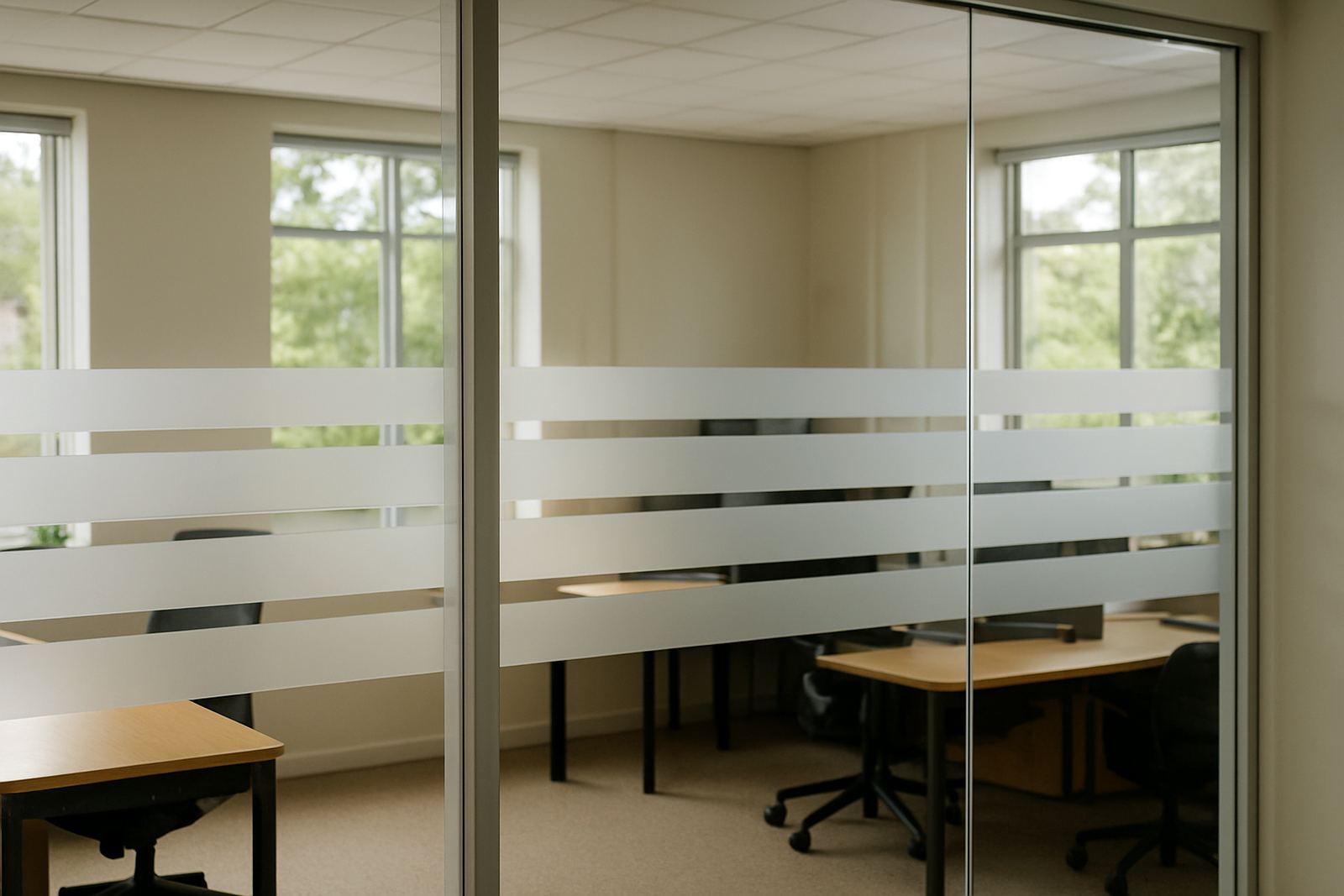
Coverage is usually the first decision because it affects both privacy and the final appearance. A full frosted panel gives maximum screening, but it is not always necessary. Many clients in Pinetown and Westville prefer partial coverage because it keeps the room bright and still gives a tidy finish on the outside. The right choice depends on how much of the view must be blocked and who uses the room.
If you are unsure, start by marking the glass with tape at the height where privacy is needed. Stand inside and outside to check how it feels from both sides. A good rule is to protect seated eye level first, then add more coverage if staff can still be seen too clearly. On large panes, even a 300 mm band can make a big difference and it often costs less than covering the whole panel.
- 100 percent coverage: strongest privacy, simplest look
- 70 to 80 percent coverage: balanced for offices and reception areas
- 30 to 50 percent coverage: useful for branding and street-facing glass
- Cut-out lettering or logos: good when you want visibility and privacy together
Choose Between Plain, Patterned and Printed Frosting
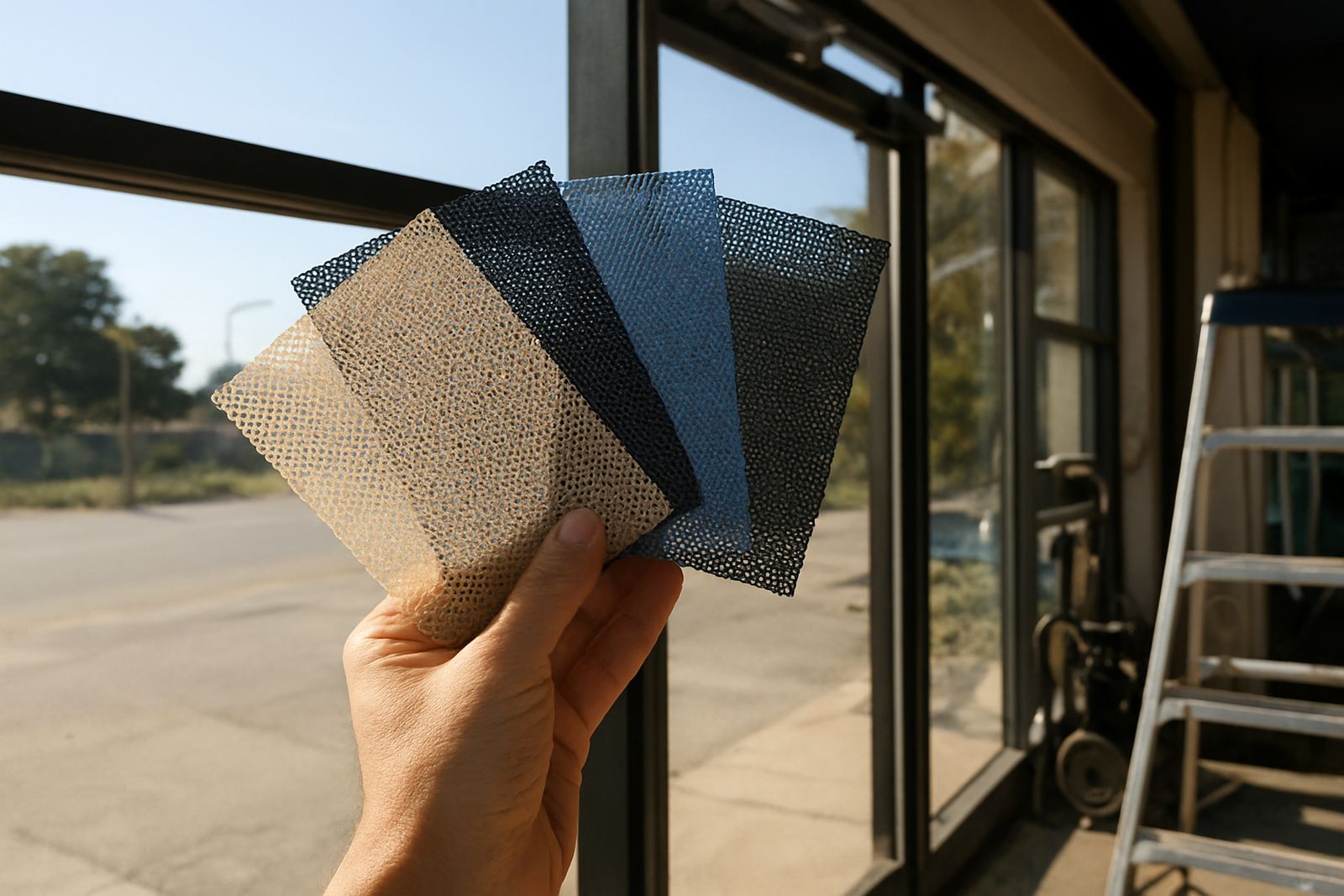
Plain frosting is the most common choice because it suits almost any building. It gives a clean matte look and works well on internal glass partitions, doors and front windows. Patterned frosting can add stripes, blocks or bands to match your brand colours or building style. Printed frosting goes further by adding logos, hours or directional text directly into the design.
For Durban businesses, pattern choice often comes down to what is practical for staff and visitors. Offices with lots of movement may need wide clear sections so people can see where doors are. Clinics and salons often prefer a softer design with more coverage for comfort. Retail spaces can use logo cut-outs or a lower frosted band so the shop still feels open and welcoming, but not too exposed.
- Plain frost: best for simple privacy and a clean finish
- Stripe or block pattern: useful for partition glass and meeting rooms
- Printed design: good for logos, branch names and operating hours
- Mixed finish: combines frosted and clear areas for a tailored look
Check Glass Size, Shape and Surface Condition
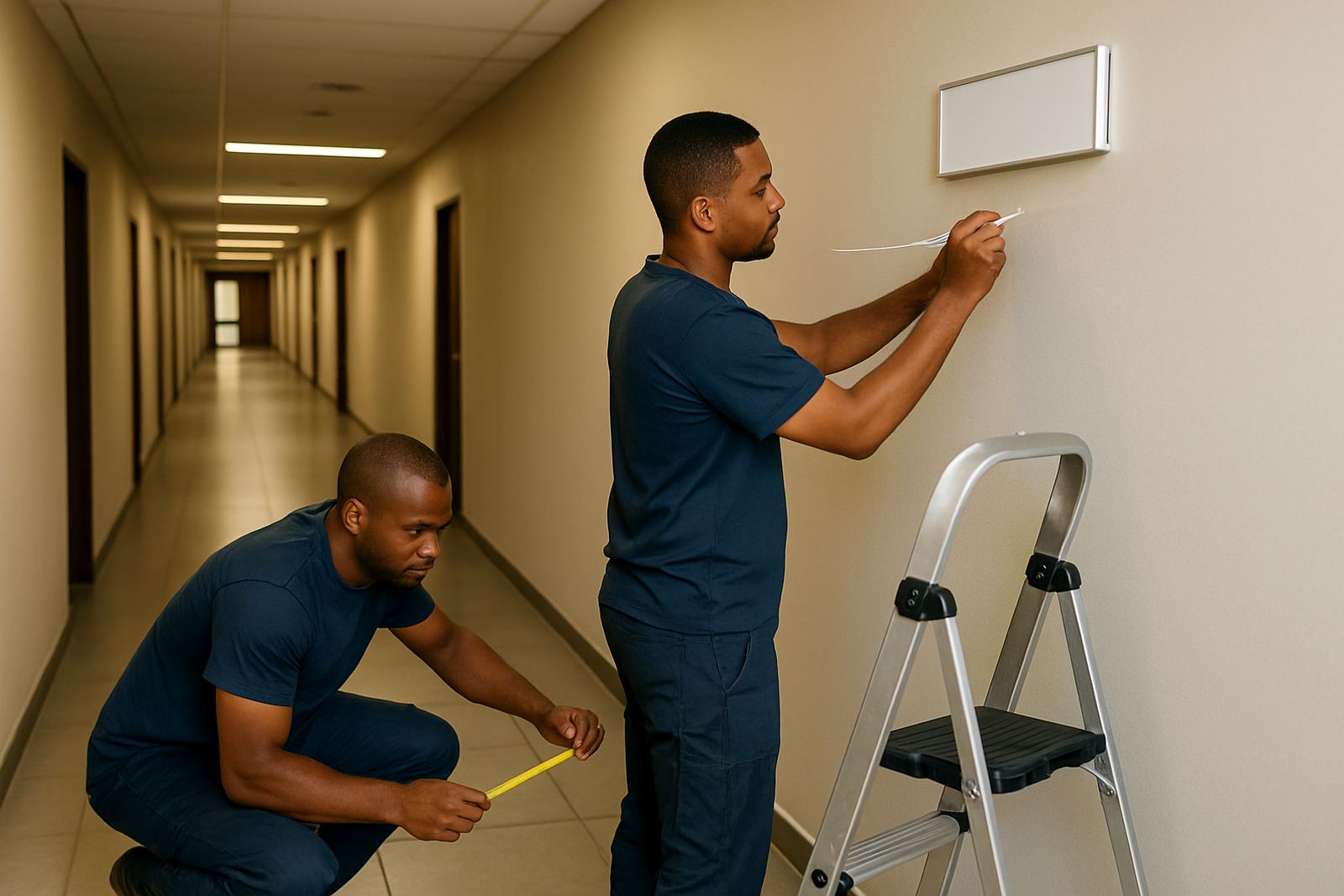
Good frosting starts with proper measurement. Large panes, sliding doors, corner glass and curved sections need careful checking before any cutting begins. We always recommend a site survey for new work so the final panels fit properly and align with frames, handles and door hardware. If a window has old film, scratches or paint marks, the surface may need cleaning or removal first.
The condition of the glass matters too. In coastal Durban, dust and salt can build up fast, so the surface should be in good shape before installation. If the glass is tinted, double-check how the frosting will look in daylight and at night with lights on inside. A clear panel can seem private during the day but more open after dark, so that point should be checked before work starts.
- Measure width and height at more than one point
- Check for handles, locks, hinges and safety markings
- Confirm whether the frosting is for inside or outside application
- Inspect for chips, old adhesive or uneven frames
Plan Installation Around Trading Hours and Weather
Most frosting jobs can be planned around trading hours so staff and customers are not disturbed. For busy sites in Durban North, Phoenix or Ballito, installation is often done early in the day or after closing time. That helps avoid interruptions and gives the adhesive time to settle properly. On larger jobs, a staggered approach may work better so one section can be completed while another stays in use.
Weather also matters. High humidity can affect drying times and dusty conditions can interfere with finish quality, especially on exposed shopfronts. If you are near the coast, it is worth choosing a calm day and allowing enough time for cleaning and alignment. For external glass and windows that face strong sun, careful fitting helps reduce bubbling and peeling later on. This is where proper site planning saves money in the long run, not the day after.
- Confirm access to the glass and any security rules
- Move stock, furniture or displays away from the work area
- Allow drying time before heavy cleaning or contact with the film
- Check whether signage by-laws or body corporate rules apply
Keep Frosting Looking Good After Fitting
Once installed, frosting needs light care rather than heavy maintenance. Use a soft cloth and mild cleaner, and avoid harsh scrubbing pads that can mark the surface. If the film is fitted on a door or high-touch partition, remind staff not to peel at the edges or stick tape directly onto the finish. A little care keeps the panels looking neat for years.
It also helps to review the finish after a few weeks. If a business changes layout, opens a new branch or updates branding, extra cut-outs or matching panels can be added later. Many clients use frosting as part of a wider sign plan, along with window graphics, light boxes, shopfront signs or vehicle markings. That makes it easier to keep the whole site consistent as the business grows.
For businesses across eThekwini, Umhlanga, Pinetown and the KZN North Coast, the best result usually comes from a clear brief, a proper survey and a finish that matches the building use, not just the glass size. Done well, window frosting gives privacy without making the place feel shut off.